Moving medical equipment is not the same as moving standard freight.
Medical equipment moving requires more than a truck and a crew. A truck and a crew may be part of the process, but they are rarely the full plan. Medical equipment moving depends on upfront equipment relocation planning, not just execution on move day.
Imaging equipment moves often depend on vendor coordination across the logistics process, along with route planning, site access, staging space, timing, and a clear understanding of how equipment moves through the facility.
That is what sets these projects apart. The challenge is not only getting equipment from one place to another. It is making sure the site, the vendors, and the movement plan are aligned before anything starts to move.
Why is medical equipment moving different from standard freight?
Medical equipment moves often involve high-value, sensitive systems that require more control than a typical delivery.
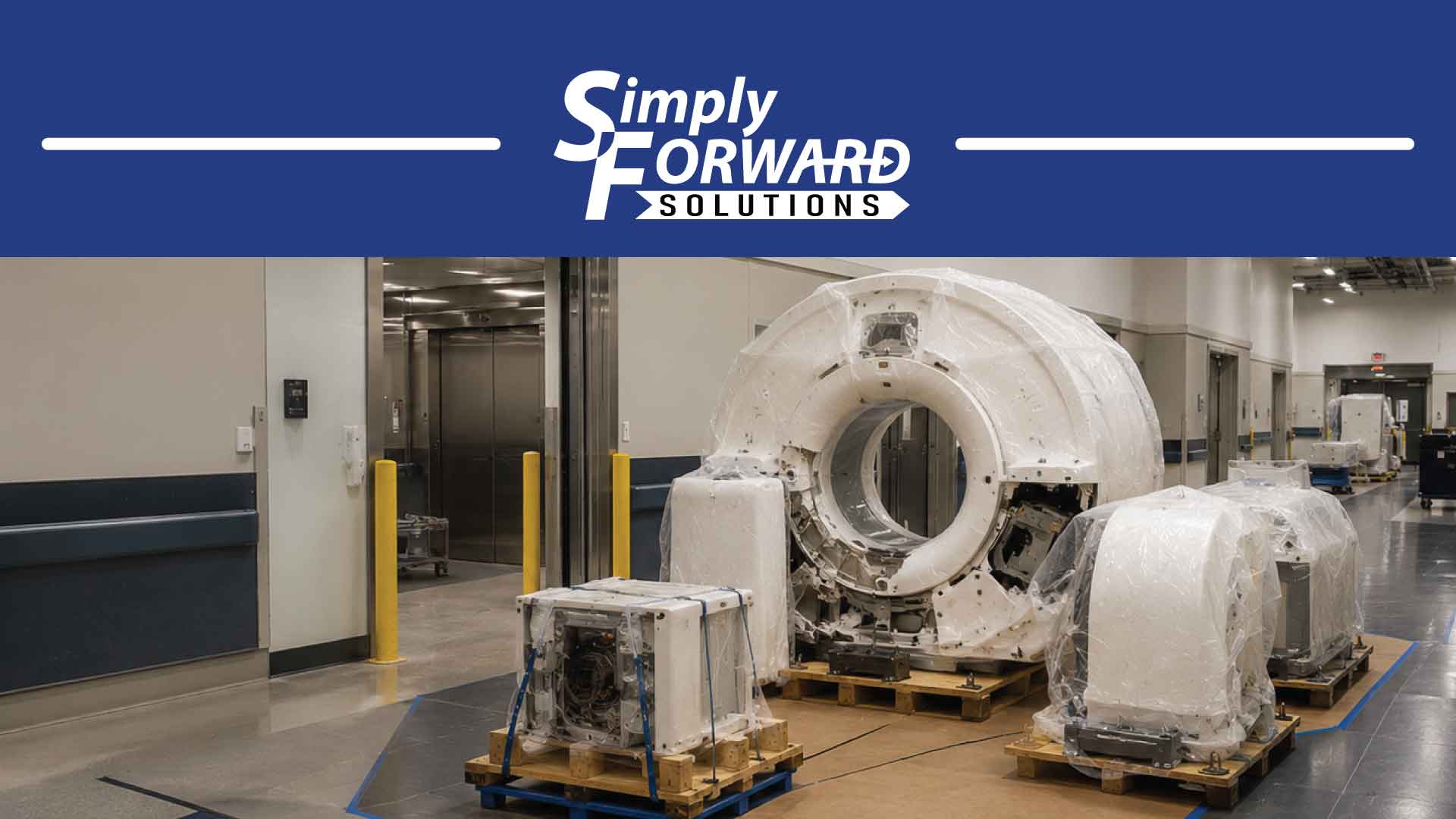
This can include CT scanners, MRI units, and other large imaging systems that must move through real facility conditions, not open warehouse space. Doorways, turning radius, elevators, service corridors, flooring, staging space, and timing all play a role.
A standard freight approach focuses on pickup and delivery. A medical equipment move requires a plan for how the equipment reaches the site, where it stages, how it moves through the facility, and how that movement fits into the overall project.
Who needs to be aligned before the equipment reaches the facility?
This is one of the most important questions in any sensitive equipment move.
The answer is usually broader than expected. Freight carriers, facility teams, installers, rigging crews, operations staff, and outside vendors may all need to align on timing and responsibilities. This level of equipment relocation planning includes confirming site access, staging areas, route conditions, and the order of movement.
When no one is connecting those pieces, the project can turn into a series of handoffs without clear ownership.
That is why vendor coordination matters. It ensures everyone is working from the same plan, with the same timing and a shared understanding of what happens next.
Why do protected routes matter in medical equipment moves?
Protected routes matter because the move happens inside a working facility, not an empty space.
Medical equipment often needs to move through back-of-house corridors, service entries, tight turns, and elevators. Floors may need protection. Doorways must be measured carefully. The route needs to stay clear while normal operations continue.
This is where site readiness for equipment delivery directly impacts how safely and efficiently the move can happen.
A quick walkthrough is not always enough.
The route should be reviewed based on the actual equipment, handling method, and site conditions. A path that looks open can still create issues if turning space is tight, flooring is not suited for the move, or staging creates a bottleneck.
Route planning helps reduce those surprises and ensures the site is ready for equipment delivery before move day.
How does timing affect CT scanner and MRI moves?
Timing is one of the biggest factors behind why equipment moves get delayed.
CT and MRI moves depend on more than truck arrival. Room readiness, installer availability, vendor sequencing, access windows, and staging all need to line up. If one part of the schedule shifts, it can affect the entire flow.
The equipment may be on-site, but that does not mean it can move immediately. The destination space may not be ready. The route may still be in use. Another vendor may need access first.
These are not transportation issues, they are planning and sequencing issues that commonly delay equipment moves.
When timing is aligned early, the move stays controlled. When it is not, the schedule starts working against itself.
Where does rigging support fit into the plan?
Rigging support is a critical part of the move, but it works best when it is integrated into the full plan.
Medical equipment rigging is not just about lifting or positioning. It depends on how the equipment arrives, where it stages, what route it follows, what the site allows, and how the next step is timed.
Technical execution and operational planning need to support each other.
A technically sound move can still face delays if teams are not aligned, routes are not fully reviewed, or the site is not ready. Rigging adds value, but coordination is what allows that value to show up at the right time.
What can other complex equipment moves learn from medical moves?
Medical equipment moves ight why site readiness matters, why protected routes matter, and why staging space cannot be treated as an afterthought. They also show how delivery timing and vendor sequencing affect the entire job, not just a single task.
These lessons make coordination challenges highly visible.
They highlapply well beyond healthcare and carry over to many complex equipment moves across industrial and specialty environments.
Many complex equipment moves face the same core challenge. It is not just how to move the equipment. It is how to align the people, the site, the access, and the sequence before the move begins.
Need help coordinating a sensitive equipment move?
Sensitive equipment moves depend on more than labor and transport.
They rely on the details that happen before move day, including equipment relocation planning, vendor coordination, and site readiness for equipment delivery.
Simply Forward Solutions helps bring those moving pieces together, so complex equipment moves stay aligned from planning through execution, instead of turning into a last-minute scramble.