What a rigging broker does
A rigging broker acts as a specialized intermediary for lifting, hoisting, and rigging projects, the kind of heavy work involved in moving industrial equipment, erecting steel, handling large machinery, or managing complex load picks. Rather than a client hiring a rigging contractor directly and managing all the details themselves, the broker handles everything in between.
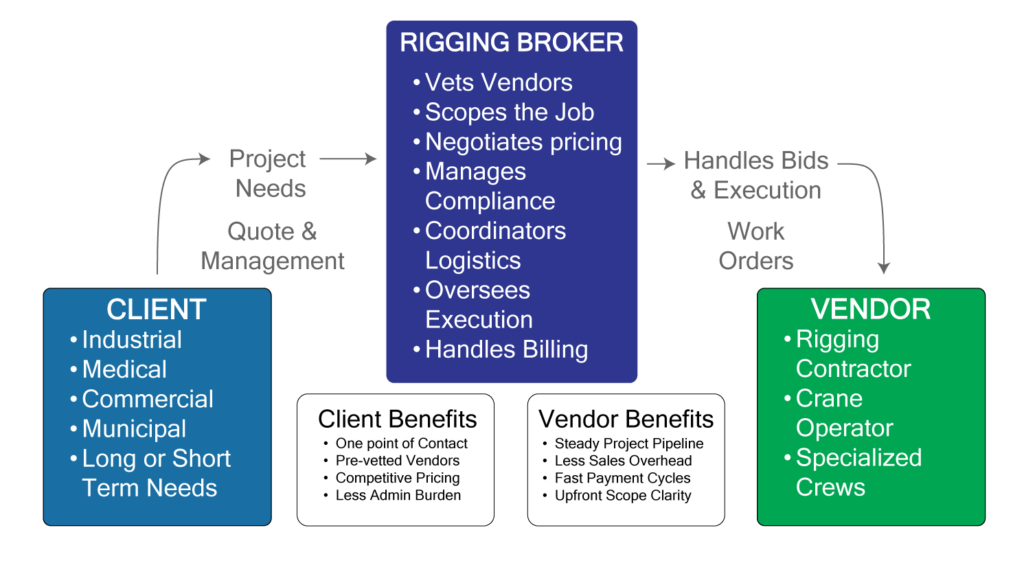
The broker's core job includes scoping the job accurately, sourcing and vetting qualified contractors from their network, gathering competitive bids, managing insurance and safety compliance requirements, coordinating scheduling and logistics, supervising execution, and consolidating billing.
How clients benefit
For the plant manager, construction company, or facility owner hiring the work:
- They deal with one point of contact instead of sourcing contractors themselves
- They get access to pre-qualified, insured vendors without doing the legwork
- Competitive bidding through the broker's network typically drives better pricing
- Compliance and safety documentation is managed on their behalf, reducing liability exposure
- Less internal time spent managing subcontractors and chasing invoices
How vendors benefit
For rigging contractors and crews:
- The broker delivers a consistent flow of work without the vendor having to invest heavily in sales
- Jobs arrive better scoped, so there are fewer surprises on site
- Payment terms are often cleaner since the broker manages the billing cycle
- They can focus on technical work rather than client acquisition
In short, the broker adds value by reducing friction on both sides. Clients get expert procurement and project management; vendors get reliable work with less overhead